Visual Design Pillars
By Neil Blevins
Created On: Sept 4th 2024
Updated On: Jan 21st 2026
Software: None
Note: This is an excerpt from a much longer tutorial about creating
Art Bibles. This page goes
into a few extra helpful details, but if you
want even more information, please visit the other tutorial afterwards.
Visual Design Pillars (sometimes abbreviated as "Pillars") are a set of
Keywords that help define the look a
set of designs, an alien race, or a whole fictional universe. Think of
them as visual hooks or design elements that bind together a large
group or entire project. They are
the most important elements which informs every visual choice when
creating an entertainment project, and are used to create
visual consistency. They are most commonly found in Art Bibles or World
Guides.
You have two choices with this lesson, watch the video below, or
read the full text.
Examples From Famous IPs
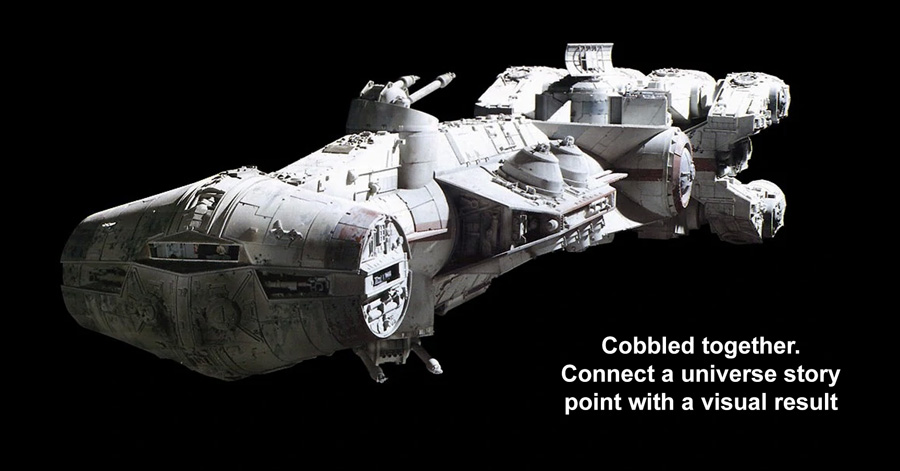
One of the most famous scifi / fantasy franchises of all time is Star
Wars. If you had to describe a visual element that defines all of the
Rebel ships from the original trilogy, it might be "Cobbled Together".
This is because they were rebels, they
didn't have nice clean factories making their ships, they grabbed
whatever ships they could and modified them in any way they were able.
This is a great example of a higher level visual hook that connects a
universe
story point with a visual result. So "Cobbled Together" could be a
Visual Design Pillar for the Rebel ships from Star Wars.
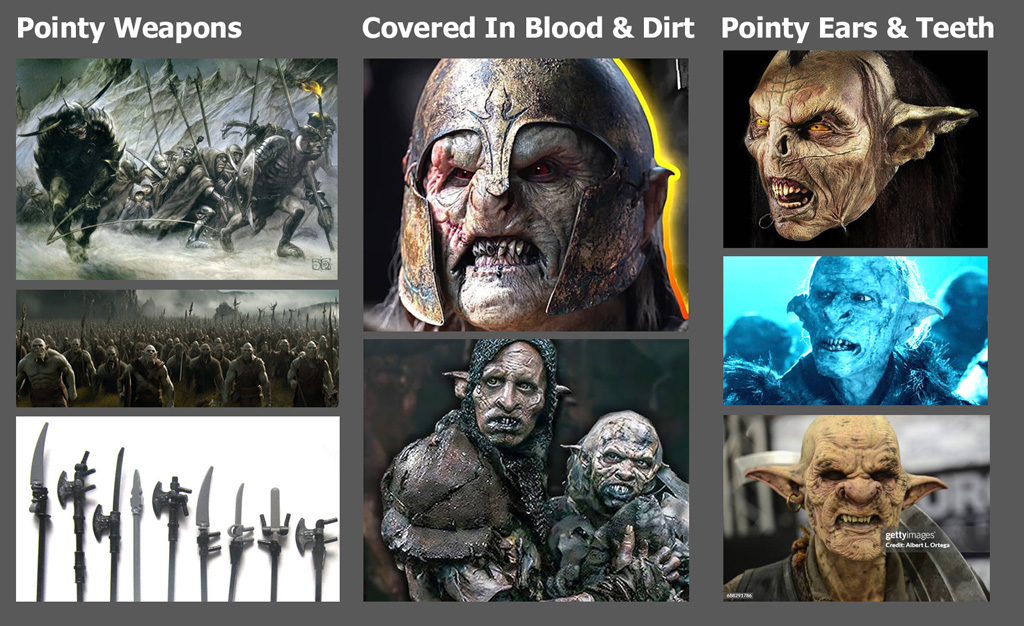
Another example is the Lord Of The Rings. Looking at all the books,
illustrations, and movies, what key elements would you use to describe
the orcs?
I'd probably use the following 3 Visual Design Pillars...
- Pointy Weapons
- Covered In Blood & Dirt
- Pointy Ears And Teeth
Here's a final example, the Transformers. First are the original 80s
cartoon / toys, and second are the Transformers from the Michael Bay
films. They're all Transformers, but each have very different looks.
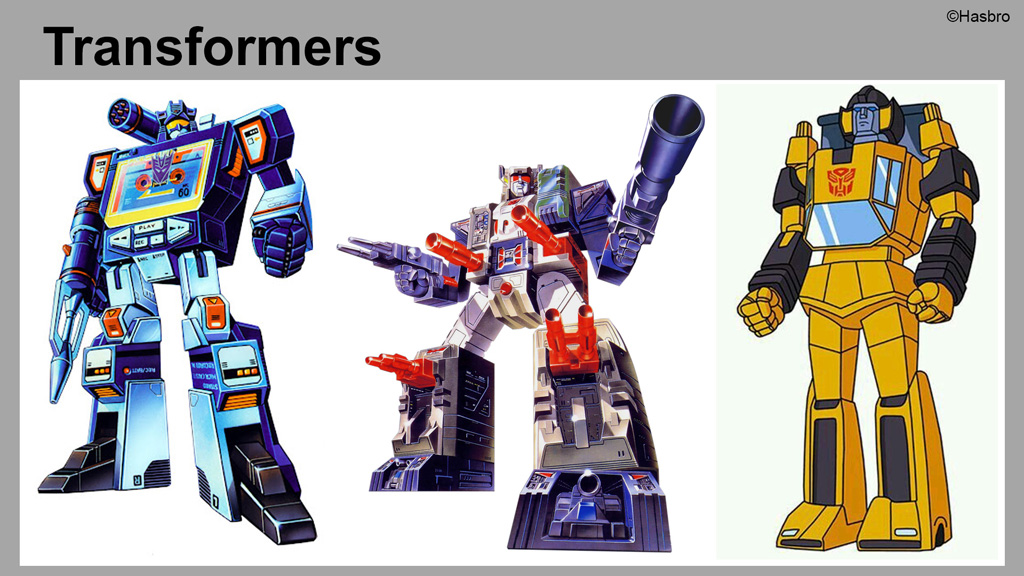
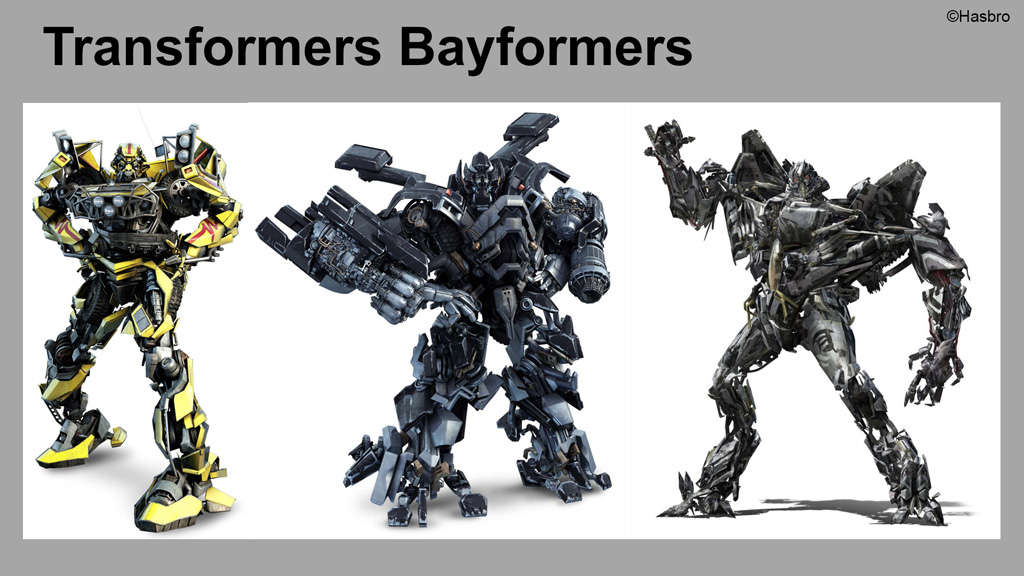
If you want some Franchise Visual Design Pillars, they might be
"Robots" and "Transform Into Vehicles". But the individual sub projects
would be different from each other, for the original Transformers, it
might be "Boxy" or "Saturated Colors", and for the Bayformers it might
be "Hyper Complex", or "Spiky".
Personal Example
So, as a practical example from my own work, here are the three Visual
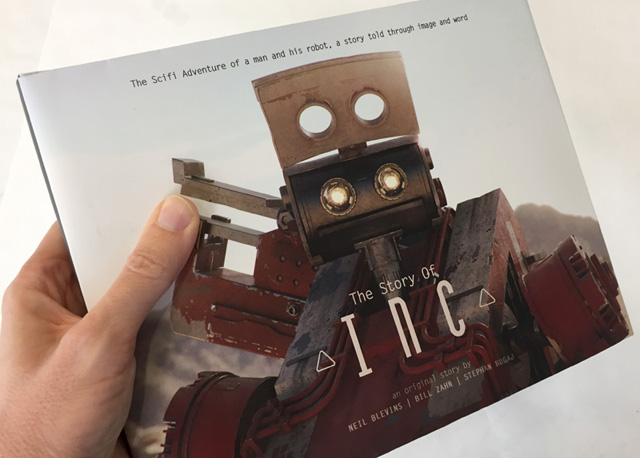
Design Pillars of the "Desert Society" from "The Story Of Inc"
book project,
a Narrative Artbook I co-created with friends, an illustrated story
about a man and his robot on a desert planet:
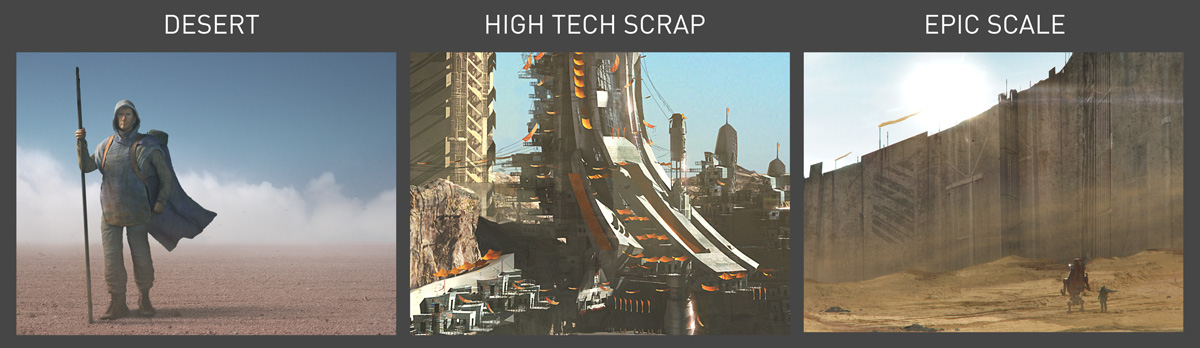
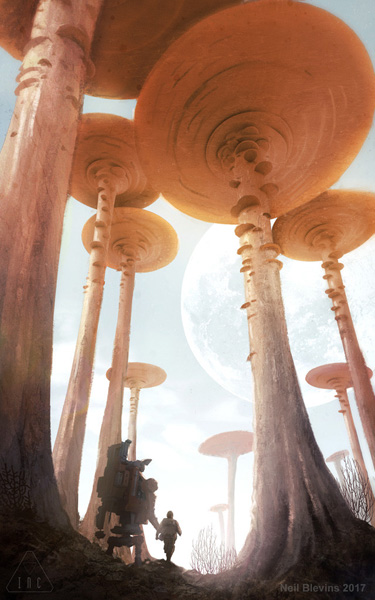
So in the story of Inc Book Project...
While we're on the planet, all visual design decisions should focus on
"Desert", "High Tech Scrap" and "Epic Scale".
So for example, if we have metal on the planet, the metal should be
rusty and damaged, because that's how metal would look in a desert.
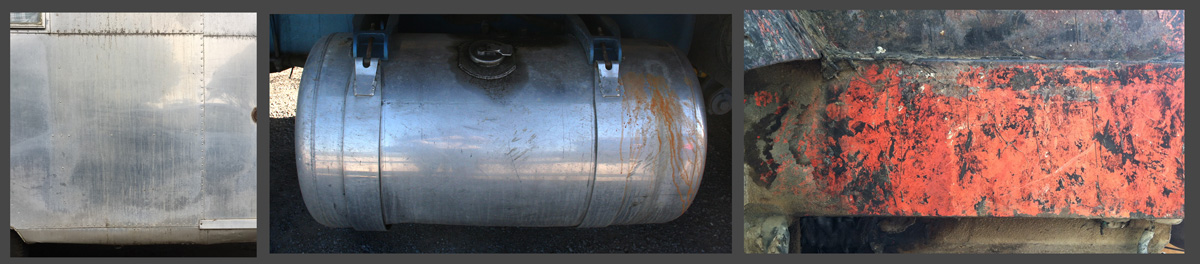
Do you want to include some beautifully polished metal in the story?
This is to be avoided, or if it is in the story, it should be there for
a compelling story reason, because it won't visually match with your 3
pillars.
Another example, we need to make chairs for people to sit in in the
Oasis, a desert city. In the story, the city is made up of bits and
pieces recycled from a crashed starship. So this is where our second
pillar "High Tech Scrap" comes in, everything in the city should be
made from broken bits of the high tech generation ship. Hence the final
designs of the furniture...
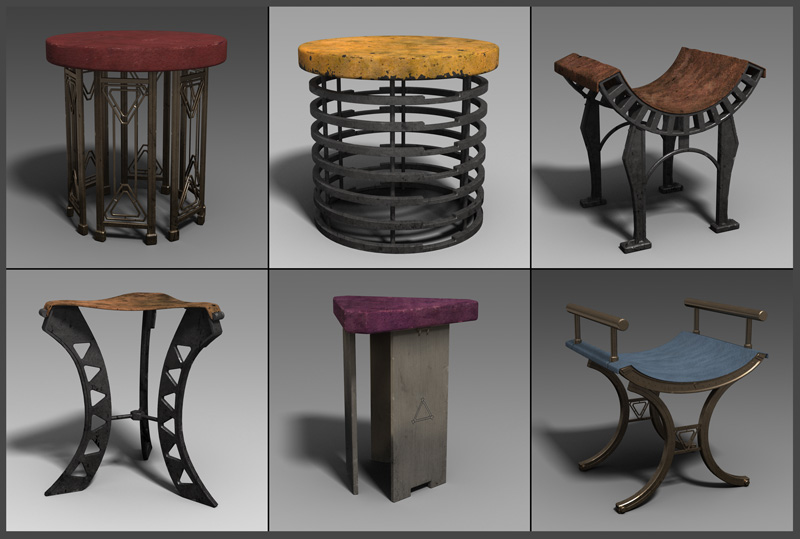
Notice chair 2 for example, it might be made from the old broken coil
of an engine part from the spaceship.
And finally, "Epic Scale", when deciding the shape of say architecture,
or the rock formations in the desert, make everything huge, avoid stuff
that appears tiny, unless again, it has an important story point for
why it's different from everything else...
Be Specific
Be as specific as possible when choosing Visual Design Pillars, don't
use vague words like "Strength" or "Integrity", words that have a ton
of
completely different meanings that can be confusing. Use words like
"Brushed Metal" or "Delicate Lace Clothing", these choices have less
ambiguity and are more actionable as an artist turning the Visual
Design
Pillars into concept art.
Exercise
If you really want to drive the point home, here's a little exercise
you can try...
- Choose one of your favorite IPs, and choose a faction. Examples:
- The Elves from Lord Of The Rings
- The Empire spaceships from Star Wars
- The Klingons from Star Trek
- What are 3 Visual Design Pillars that define this faction? It can
be shapes, colors, textures, etc
- Make a quick page with pictures showing examples of each pillar.
This site is ©2026 by Neil Blevins, All rights
are reserved.
To see hundreds of other tutorials similar to this one, visit the
Neil Blevins Education Site